The Blank Piece of Paper

A blank piece of paper – depending on your feelings about generating new ideas for writing – can be either the most daunting or most exciting starting point for a writer. 

Let’s assume for a minute it’s the most daunting. The panic of having to put something on the paper and the possibility that what you do eventually put down might be absolute rubbish is generally the reason this bit is scary – not to mention the now mounting pressure on your creative mind to come up with something, anything, because now it’s been an hour and there’s absolutely NOTHING on the paper. How will I ever be a writer when I can’t even think of the first word? 

Luckily I am still very much in the ideas stage – there’s no pressure on me to come up with a new idea to meet a deadline or prove I’m not a one-trick pony. Right now I’m still looking for the first trick so I get to enjoy this bit – the ideas bit. 

At the moment I am taking part in an online creative exercise called Story Storm:
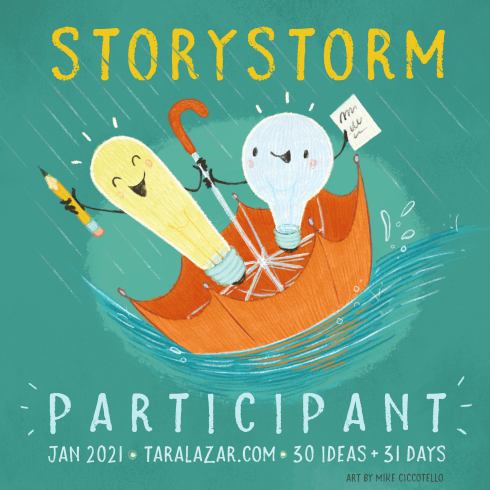
Each day in January an author writes a blog post about where they go for their inspiration, how they generate ideas, where creativity stems from for them. I am 17 days in and it’s been fascinating to read and certainly inspiring to have a constant stream of ways to generate ideas trickling into my inbox. 

Guess what – there is no right or wrong way to be creative. We are all capable of creativity, some of us are interested in harnessing it and taming it into some form of hobby or career, others are happy being creative as and when it is needed (my Dad is very creative with his use of duct tape to solve any household problem he comes across…) 

When I teach creative writing in schools, the generating ideas part, the blank page, is often as daunting for children as it is for adults. I want children to love creating stories and to be excited about writing down their ideas – they certainly are not shy when they are first learning to tell stories. The number of stories about dragon poo I’ve listened to our four year old enthusiastically deliver could stretch to a ten part series. But once children are sitting down in a classroom with that blank piece of paper their insecurities and worries can start to block their creativity.

So how do we engage children with writing? I don’t mean the classic story mountain planning sheet or the basics of sentence structure and correct grammar. Those things are important in their own way, of course, but how do we harness that inbuilt creativity children demonstrate all the time in their play, without accidentally instilling in them the fear of a blank page?

We must be silly. We must be playful. We must be active. 

And we must never be afraid of demonstrating our own creativity and thought processes when it comes to writing. Show them a blank page and show them that there’s nothing to be afraid of. One of my favourite activities in the classroom with younger writers was to ask them to shout out the first word which popped into their heads – even if that meant saying the name of something they could see in the room, or their own name, there was no wrong answer. Then bung some of them up on the board and start filling in your own blank page. 

Now our page isn’t blank anymore and we can start generating ideas. Let’s imagine the words on the board are DINOSAUR, TOILET (There’s always one kid who says toilet…), CHAIR, LIGHT, SANDWICH – I might say something like this,

Wow! This is a brilliant story you’ve written. Look – There’s a dinosaur who eats chairs. He loves eating chairs so much that soon no-one has anywhere to sit. You’ll never guess what – everyone has to sit on the lights instead. Well, hang off them really. All the children hang off the lights at lunchtime trying to eat their sandwiches. When the dinosaur runs out of chairs to eat in the school he starts looking for other places people sit down. Uhoh, you got it – he starts eating all the toilets! 

OK, it’s not Shakespeare but if done well it should have the desired effect of relaxing the anxieties around generating ideas and normally has the children in fits of giggles. As they get used to the idea, they start coming up with their own story ideas for the words they’ve generated on the board. 

So what did we learn? It’s okay to be silly and make up ‘a load of rubbish’ because writing should be fun and silly and some of the best authors for children tap into this world and capture children’s imaginations by doing exactly that. So go now and write it – write some rubbish down on a blank piece of paper and then have fun trying to turn it into something silly. 
Forwards and Backwards

When I met my half-Danish husband eleven years ago, he introduced me to Danish culture. Denmark isn’t somewhere I’d been before or knew very much about – I was more of an Ikea girl, myself. Fast forward a few years and a huge explosion and celebration of all things Danish happened in the UK and suddenly everyone was talking about Hygge and candles and a seemingly endless list of reasons to bring out more food and drink, and all the other things I’d been hearing about since 2009. If only I’d realised how big Denmark would suddenly be over here, I’d have written the damn book myself. Hindsight, as they say, is a wonderful thing. I didn’t write a book about Hygge and share this secret Danish cosiness with the world, but hats off to those who did.

Besides Hygge, a favourite Danish insight my husband introduced me to is the saying, “frem og tilbage er lige langt”, the sentiment doesn’t translate exactly, but in our house we refer to it as simply this, “Forwards and backwards is the same distance.” Often it crops up on long journeys when we’ve taken a wrong turn and have to retrace our steps. It makes sense literally, if you take a step forwards it is the same distance as if you take a step backwards, but I mostly enjoy the sense of acceptance and calm which it brings. It doesn’t matter which direction you’re going in, rather that you simply are going.

It’s the end of 2020. What a year. Go backwards 365 days and imagine being told what your year would be like. Back then, it was just a great piece of fiction – I’d read it. I’d watched it in countless post-apocalyptic films (another passion my husband introduced me to). I have to say I’ve enjoyed candles and good food much more than apes and space travel, but that’s probably for another discussion. Now skip forwards 365 days. Suddenly making New Year’s resolutions (as a list lover this is a favourite past time of mine) seems daunting…futile… or perhaps we are just worried about tempting fate again? Who started 2020 announcing that “this will be my year” – how on earth do we begin planning for the next one?

Yet plan we do. Something must keep us going and plodding on or we would just end up standing still. So I have duly taken out one of my favourite notebooks and written 2021 at the top. What do I want to achieve in 2021? So much of this year has felt like adapting, responding, damage limitation, survival – for some, these are feelings which might have sparked creativity and passion and energy, for others they have caused anxiety, worry, confusion and the rest of us, perhaps, have muddled along somewhere in the middle.

For me, I had grandiose ideas about becoming a published author in 2020. Back in January I thought a year was generous, a safety net of 365 days but how long do these things really take? Much like the rest of my ideas about 2020, I was wrong.

I have made my own website, approached literary agents and publishers, joined writing forums, shared my writing with other writers, been awarded an honourable mention, got to the semi-finals of a major writing competition and most importantly, I’ve written. Not every day and not always consistently, but I have produced stories and poems and blog posts of which I am proud, which have kept me motivated during the harder parts of 2020 and created hope that one day this is something I will be able to call a career and not just a hobby. Perhaps a year to be published was too ambitious? Perhaps in this particular year, even more so, just because it didn’t happen in 2020 doesn’t mean it will never happen.

We’ve heard so much this year about hope and kindness and generosity and how much good can stem from so much sadness. I think at their core, New Year’s Resolutions are about being hopeful and optimistic which is probably why I have always loved writing them. I’ve never lost the two stone I write down on the list every year but that doesn’t stop me writing it down and starting the year eating healthily and off the booze. Maybe 2021 is the year I have a healthy BMI and a published story and maybe it’s not, but I don’t want to give up trying and hoping and working towards my goals because I’m scared I might not meet them.

After all, if forwards and backwards are the same distance then it doesn’t really matter where you end up, as long as you keep moving.

Honourable Mention

Back sometime near the beginning of 2020 I entered a writing competition. Full disclosure – I didn’t win.

I did, however, get an “Honourable Mention” from the judges which pinged through on an email back in October. I told a few people, not many, and some suggested writing a post about it.

I’ve been avoiding writing said post for a while now and I expect that it’s mostly down to misplaced embarrassment. Who dances around because they got an honourable mention? I wasn’t even a finalist. There was the winner, the people shortlisted and then at the bottom of the pile the HMs. To be honest I felt a bit silly being excited about it.

It doesn’t help that the phrase “honourable mention” is imprinted on my brain as the award Monica and Ross receive in their eighth grade school talent show’s brother-sister dance category, with their famous performance of “The Routine”. If you don’t know what I’m referring to then we are probably on very different life paths. Go watch Season 6, episode 10 of Friends immediately and then get back to me.

They are so proud of their achievement – which of course creates that wonderful humour which stems from dramatic irony. How many brother-sister acts actually entered the eighth grade talent show after all? Yet they are so proud of their HM in what we can only assume was a very limited pool of contestants.

I guess, to my shame, I was worried that my HM announcement might be received in the same way and I really didn’t want to be doing “The Routine” on a blog post and leaving myself vulnerable.

Then I read an article by a lady who has been writing (unpublished) for 20 years. Imagine that. Other writers popped up in the comments; 5 years, 7 years, 10 years until they had a positive reply from an agent or publisher. And here I am in year 1 of actively pursuing my goal of being published. Who am I to laugh at an honourable mention? It’s a start and I am only at the beginning after all.

The main advice the other authors gave about keeping yourself motivated on the (potentially) long road to publication was this – celebrate every small step; shout about every little win; be proud of the HMs and the long lists and the almosts and the not bads and the maybes and actually be proud of this fact – you entered the competition in the first place and you put yourself out there and said hey, this is my writing, World.

Look – there’s even a link. Scroll down and my name is really there – with all the other amazing Honourable Mentions.

https://literarytaxidermy.com/news.html

Next step, the podium at Dick Clark’s New Year’s Rockin Eve to show everyone that yes it’s a small step to get an HM but it’s still a step and that’s worth dancing about.

And just for fun, here’s two of our best friends performing ‘The Routine’ like absolute lockdown legends…

The Menu

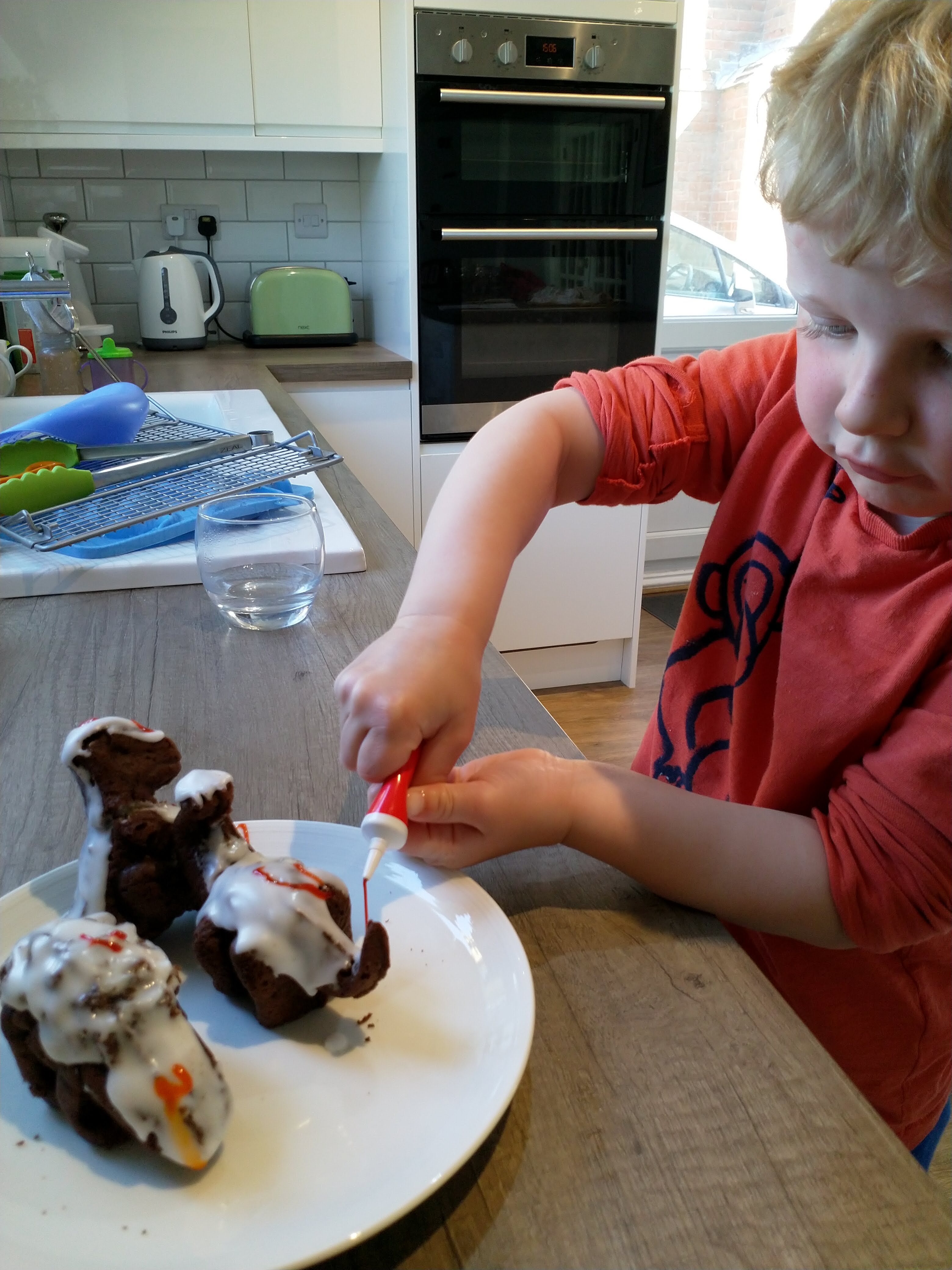
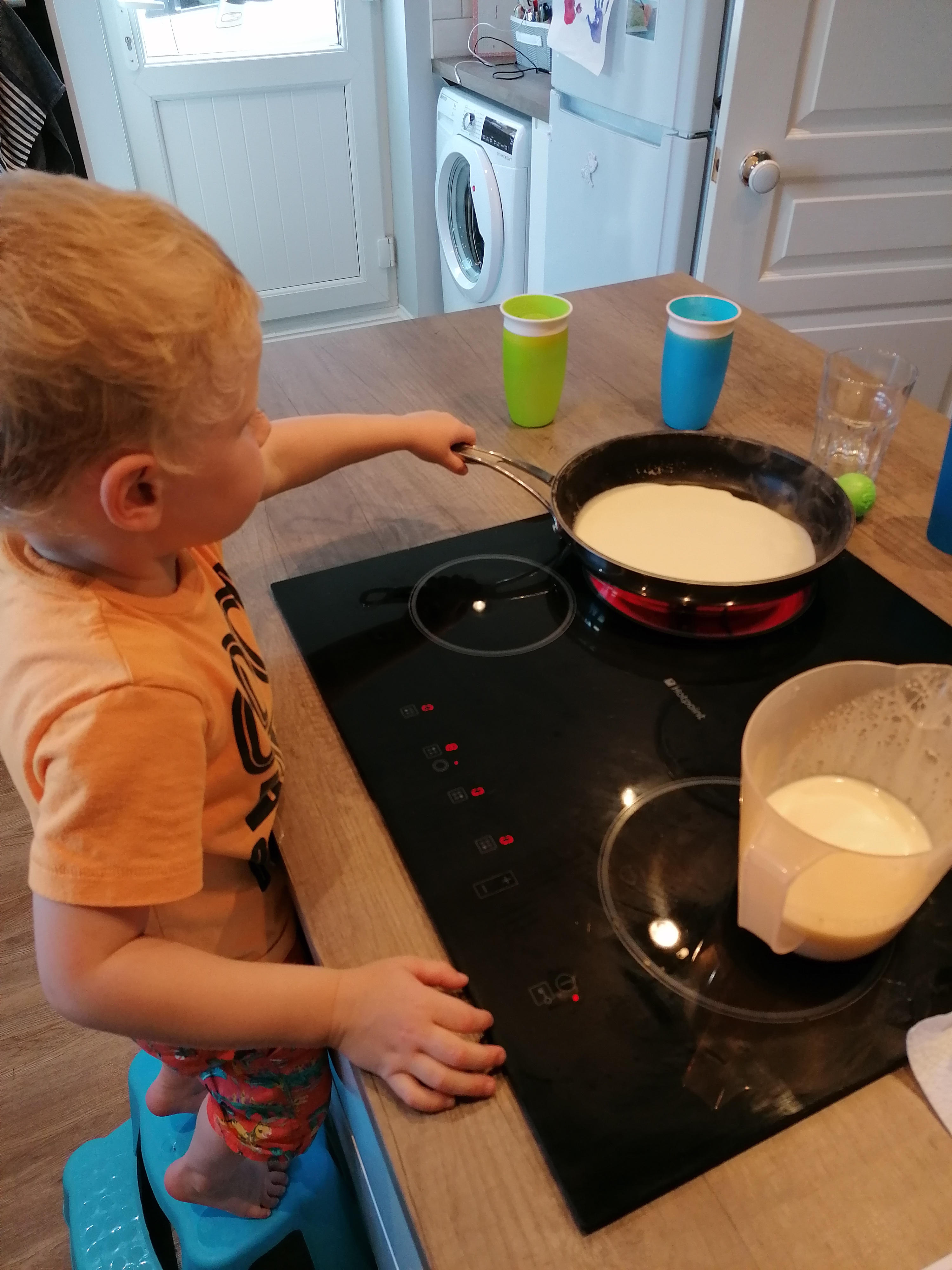
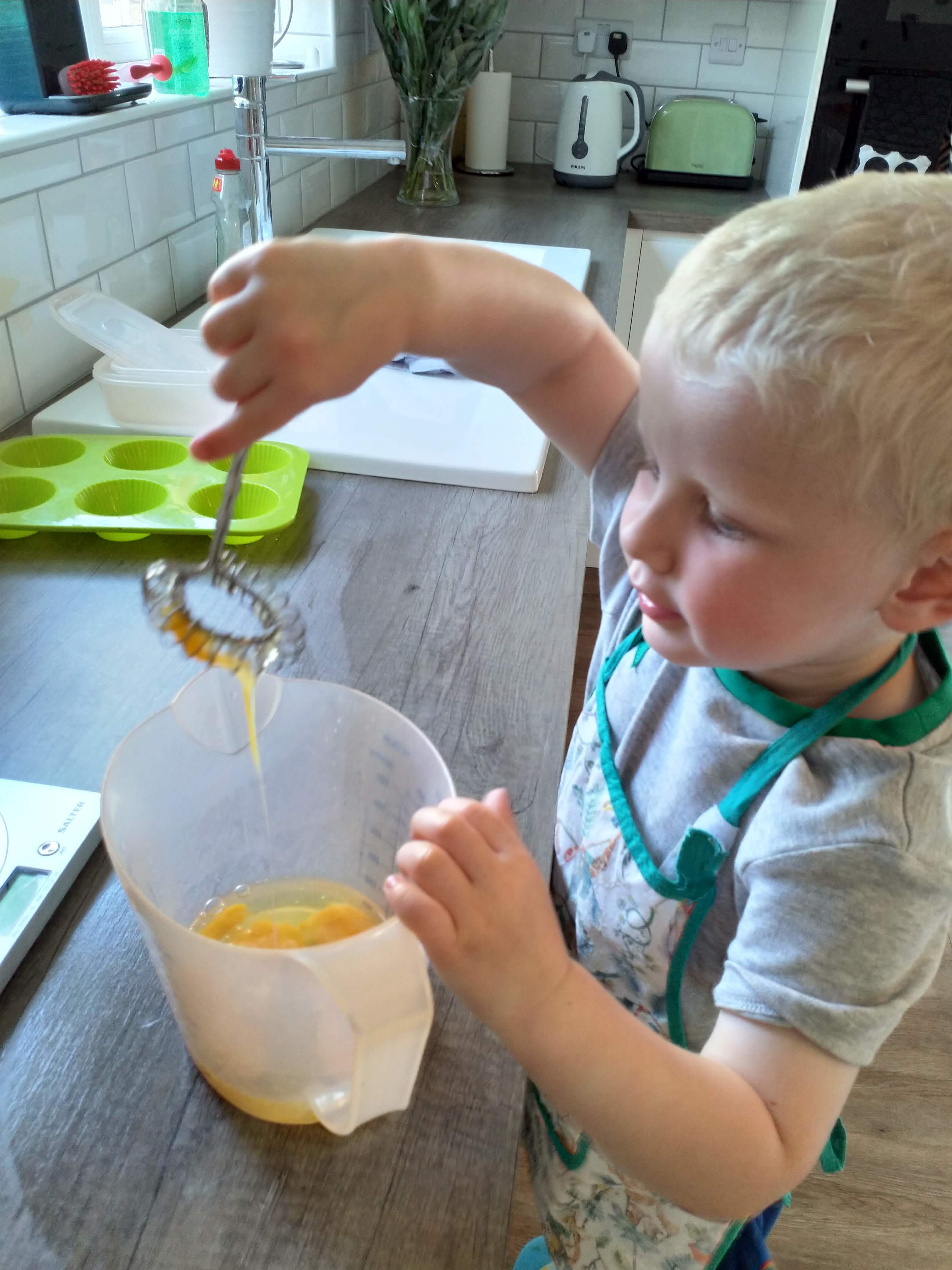
This poem was inspired by our son’s love of baking, cooking, tasting and creating some truly unique dishes!

The Menu

In my kitchen I can make
Chocolate soup, 
Ice-cube pie,
Spaghetti with banana.

Sandwich milk,
Carrot toast
And dinner for a Llama.

Yoghurt eggs,
Avocado cake,
Cereal with jelly.
Bacon Lemonade
And tea served in a welly.

The specials are
Pasta, 
served with broccoli flavoured lollies.

Be sure to bring your appetite,
Your raincoats and your brollies.

The Chapter Book

I have loved writing picture books over the last year – they have proven themselves to be far more complex, exciting and demanding than one might believe of a story, especially one where so much is told through the illustrations and their interaction with the words. 

For now though my picture books are resting – taking a breather and enjoying some space away from my frantic editing and re-writes. I know that for as much as I love my stories we are too close now – like lovers who have spent time in a honeymoon bubble and need some time to step away from one another and remember who they are alone. 

We will reunite once more, perhaps in a few months, with fresh eyes and excitement. Now it’s time to try something new. Creativity does not come from reading and re-reading the same words. It comes from challenging yourself with new ideas, new words and new experiences. From looking at something different and asking questions you haven’t asked yet.

I am currently working on my first chapter book for 7-9 year olds. Just learning this information has taken a disproportionate amount of time in my mind. It transpires that chapter books for children are categorised under two headings – early readers and middle grade. Afterwards you’re moving into Young Adult stories which I’m not grown up enough to write yet. Seems simple enough? Except then you learn that there are different age brackets within early readers and not all agents, publishers or book sellers categorise them in the same way. Mind-Blown. 

If the age range debacle wasn’t enough to get your head around, the gender division within the marketing world of chapter books has left me awake at night with fury. Chapter books – think the Beast Quest series aimed at boys and the Rainbow Magic series aimed at girls. Scary monsters and adventure for boys, fairies and sparkly rainbows for girls. I’m deliberately choosing extreme examples and of course there are a wealth of books which don’t rely on these specific gender extremes but the books are still labelled ‘boy books’ and ‘girl books’ – blue and pink. 

Interestingly, research shows – and this is certainly true of my experience teaching and reading with this age group – that girls will read books aimed at boys but boys are very unlikely to pick up a chapter book marketed for girls. So much so that to find a female lead character in a chapter book aimed at boys is a bit like meeting Santa, whilst cruising through the Bermuda Triangle on the back of a unicorn. 

Would Harry Potter have been as successful as it was if Hermione had been the hero and not the sidekick? Would boys have read that book? Would half of the population have missed out on the awesomeness of Hogwarts because there was a girl in the centre of the front cover?

These are the questions which have kept me awake at night. Looking back at my picture books I realised that Percy, Rufus, The skateboarding Baby, Croc and in fact all of my main characters are male. How did that happen without me realising? Me, who sings of empowering women and the importance of gender equality, how did I miss it? 

Even picture books are gender biased – I’ve read so many picture books with male characters that my brain is on male-character-auto-pilot. Enough is enough. 

I want our daughter (and perhaps even more importantly our son) to grow up reading my books which have amazing, strong, inspiring, awesome characters. I want them to be moved and excited and intrigued. I want them to love my lead characters as much as I do and I want them to see the character first and the gender second. 

Not much of an ask for my first chapter book series then, is it?

Goldfish

This weekend was our son’s fourth birthday. From his younger sister he received a goldfish tank and we all took a trip to the local pet shop to purchase three new family members: Sugar-puffs, Muffin and Garage.

Gold fish are the archetypal children’s pet and I have fond memories of my own goldfish from years gone by. So in memory of my childhood fish here’s a little poem I wrote about them…[NB: no goldfish were eaten during the composition of this poem]

Marvin and Marlene
I have two orange goldfish
they’re called Marvin and Marlene.
It’s my job to feed them
and make sure that they’re clean.

It’s a pretty big responsibility
for someone small like me.
My dad says if I can’t manage it
he’ll have chips and fish for tea.

Once upon a time…

Whilst visiting a children’s play area this week we stumbled upon this chair and it got me thinking about beginnings.

“Once upon a time” is an opening synonymous with fairy tales. We instinctively know which characters to expect, rule of three to pop up and of course, a happy ending – all those expectations from a four word opener. Once upon a time we were transported to a world of princesses in towers, bears who eat porridge, girls in red cloaks and those four words have stayed with us ready to transport us back to their world in an instance. 

The first sentence can be extremely daunting to write – hook the reader in, excite them, inspire them, get them to keep reading and set the scene for the story – a fairly big ask when you break it down. I was talking with another writer last week who said he’d repeatedly written, deleted and re-written the opening of his novel. In his mind there was no point in continuing to write until he had the beginning in place. 

When I write picture books they are normally inspired by something someone has said. More often than not it will be our three year old son or one of his peers – they’ve absentmindedly spoken gold dust, often more by mistake than by design. So I magpie the idea, phrase, word, sometimes the whole sentence and it goes straight onto the magnetic writing board on our fridge. 

The board was initially meant to house our weekly meal plan and then later became a general notepad for things we were planning to do in the week. Now it is a garden of poetry, an inspiration board and a starting point. It is where my stories begin.

Sometimes they stay there for months, gathering dust and being smudged until one day the rest of the story arrives. It arrives without warning and often inconveniently at 4am when the sane people are fast asleep. But there it is. The fridge phrase has festered away until images are conjured and words arrive. At this point I might make a few notes on a post-it I keep in my bedside table drawer, but more often than not I do nothing. I just wait. 

It is normally a few weeks and often a month or two before I sit down and commit the idea to paper. At some point the stars align, creativity starts to bubble away and I know it is time to write the story. Funnily enough it is rarely at the time when I have cleared space in my schedule to write, or set aside time to work. More often than not, it will be an infuriatingly ill-timed moment when I realise the story is ready to be written and I will end up scribbling half of it down on old napkins, or sweet wrappers at the bottom of my bag, so I don’t forget the words.  

And then the words are there on the paper and the first draft is complete. A mere three or four months after I heard the initial phrase. Other times I just sit down and write and see where I end up. Drafts of stories which have yet to become anything sit in their own special folder on my laptop, awaiting the day they might be offered a second chance with a new beginning – stories like, “The fly who won’t die”, which was a phrase our son repeated until it manifested itself in quite a dark, political picture book which has no place on a child’s bookshelf.

I never feel frustrated when I write though, whether the words become a story I am happy with or not. As I’ve learnt to appreciate, writing stories which won’t turn into books is as important a part of the creative process as writing the good stories. Committing time to writing, playing around with new ideas and concepts for a text, experimenting with words and language are as good a use of writing time as creating a great first draft. 

I could sit and wait for good stories to come along but more often than not the best idea is just to begin. Begin writing and see what happens, even if your beginning isn’t the one you imagined, it is a starting point for everything else. It’s time to see where the words take you; it’s time to begin. 

Just Read

They say if you want to write well, read well. Read often. Read everything. Read good writing and not so good writing. Read. Read. Read.

Getting transported into a good book is one of my favourite feelings. I have lost count of the times my husband has walked in on me sobbing, clutching a book with total heartbreak, or longing, or love for one of the characters. He even walked in once when, whilst reading One Day for the first time, I hurled the book across the room because I couldn’t believe that David Nicholls could do what he did with such callousness.

Likewise I have often stirred the household from peaceful slumber with raucous laughter in the middle of the night as, by the nightlight glow “I’m just going to finish this chapter” has rolled into 3 more hours of bleary eyed joy, most recently when I was following the story of Don Tillman in The Rosie Project trilogy.

Some nights, sleep has refused to claim me as I’ve been left in nail-biting panic after reading the latest crime-thriller by Danish author Jussi Adler-Olsen. Every creak in the house, every pipe gurgling has transported me back into his world and left me unable to reason my way back out.

And that’s before I even get to one of my all time favourite authors – Susan Hill. More terrifying than any horror film I’ve ever seen is the fear she instils in me as I read another of her ghost stories. It’s just words. Words. How can words make me feel with such intensity that I can’t sleep, or stop laughing, or cry inconsolably? Just words.

And then there is my favourite crafting of story – The Picture Book. In less than 1000 words a good picture book author can tell the perfect story with drama, tension, relatable characters, satisfying conclusions and heart. Most importantly, heart. Often they can achieve this with hardly any words at all because of course the joy of a picture book is that perfect pairing of minds between an author and an illustrator.

Both bringing their own talents to the page and, when done well, bringing out the best in one another’s work. It is a common misconception that a picture book is a story with pictures which show the reader what the writer has written.

How condescending that would be when the audience of young children, and the adults who are reading the story to them, are capable of absorbing so much more. Let me give an example…

Erik sat on the bench eating his sandwich. [Image: boy sitting on a bench, eating a sandwich]

Now we have a picture to match the words. It’s not that this is wrong but it’s not exactly inspiring is it? Children are naturally curious. So let’s give them something to be curious about…

Erik sat on the bench eating his sandwich. [Image: boy sat on a bench, eating a sandwich. Crumbs from the sandwich are on the floor and an octopus like arm is reaching out from under the bench to pick them up. The boy is unaware.]

Which image would have you turning the page?

There are some amazing picture books which utilise this picture-word relationship. Rosie’s Walk, for example, tells the story in writing of a hen walking around a farmyard. It would make for a fairly uninspiring audio book I can assure you. At no point does the text mention that there is a hungry fox following Rosie the hen around the farm, but we know he’s there because we can see him.

The author-illustrator goes one step further because not only can we see the fox which is never mentioned, we are left questioning whether or not Rosie can also see him.

Is it coincidence that the fox falls into several traps along the way? Or did the seemingly unaware hen know exactly what she was doing walking around the farm and leading him into danger?

Pat Hutchins captures perfectly in Rosie’s Walk the symbiotic relationship between pictures and words – and perhaps as he is both author and illustrator this journey is one step easier – he could see the bigger picture, as it were.

As an author writing picture books I am still learning the craft of ‘leaving space’ for the images. When I write I picture the words on the page and can imagine the characters and how the images might look. Yet, were I lucky enough to get to the collaboration with an illustrator stage, I am sure they would have different ideas of how the text should be brought to life.

After all, I am sure when Julia Donaldson wrote The Gruffalo she had an image of the Gruffalo in mind as she crafted the story. Indeed she tells us certain key details in the text – “purple prickles all over his back” – but it is Axel Scheffler’s Gruffalo that is the image we know and love.

When I first started writing picture books I found myself drifting between not enough written narrative and too much. Now I always have the mantra “leave space for the pictures” in my head. And if in doubt I just read what I’ve written aloud. Why have I included that detail? Is it information which would be better told through an image?

The same goes with the emotional journey I want to take the reader on. If I want to make them laugh then I could use words or I could leave it unsaid for the image to evoke as a page is turned and something funny is revealed. More often than not a combination of the two, and best of all when the two work hand in hand, is what brings the story to life; text and illustrations combining to create magic on the page.

Editing

Teaching children at primary school how to edit their work is not an easy process. For them, the first draft is the only draft.

“You asked me to write a story about a mythical creature, Miss. So I did. Now it’s done. Is it break time yet?”

Something happens quite early on in children’s learning which I saw time and time again with children who arrived in my classroom. By the age of 7 (and often long before) children have categorised themselves into two camps – good at maths and bad at maths. It happens much sooner with maths than writing.

Why? Because when you look at a page of maths working it has been marked one of two ways – right or wrong. As a young child you are not interested in the process, the method or the working. It is irrelevant to you whether or not you got the first step right because you are looking for one thing and one thing only – did the teacher give me a tick or not?

Ticks equal confidence and once children lose confidence in themselves it can be very hard to rebuild. Some schools have abolished ticks and crosses in a bid to ease pressure on children, but guess what – highlighting in two colours or using dots and lines creates the same problem. The symbol might be different but the outcome is the same.

So we work hard to build resilience and teach children that it’s okay to make mistakes; it’s okay to be wrong. We praise the journey and not just the finished product. Learning to edit work celebrates this process. Children should learn that the first draft is exactly that – not right or wrong, just the starting place.

The natural editors in the classroom tend to, in my experience, be the confident mathematicians. The children who don’t mind the crosses or the orange highlighter, the ones who can bounce back and have another go.

I was not a confident mathematician. When I was at school my nose itched for most of my maths lessons, especially the double period on Friday afternoons. Itch. Itch. Itch.

When I don’t understand something my nose itches. I am told it is a displacement technique my brain has invented to distract me from the fact that I can’t work something out. The same thing happens when I try and read maps. Thank you World for the wonder that is Satnav.

So when I started writing, editing my work became a bit like solving a maths problem. I didn’t really know where to start. It turned out I was one of the, “Work’s done: Playtime now,” children. I couldn’t see past the first draft.

Was the second draft meant to be a proof reading exercise? Or should I put the end of the story at the beginning and see if it’s better that way around? Maybe I needed to start again completely and rework the entire thing so it’s a farm story set in space.

Suddenly my nose was in itch-overdrive.

So I did what I encouraged the children to do when I taught them how to edit their writing…

I showed someone else. Actually, I showed a few people. They say it’s best not to show your work to friends and family because they won’t be objective; good manners and social kindness etiquette will replace productive and useful criticism.

So you need to show the right people. My husband is one of my biggest fans but he cannot let a grammatical error, spelling or punctuation mistake go unannounced. I could write a truly terrible story and he would tell me it was wonderful but I know I can trust him to tell me when a comma has lingered too long or an ellipsis has overstepped the mark.

He didn’t disappoint. But once the fundamentals were in place that left me with the story. The big bit. How would I start editing that?

Time helped. Leave your writing for long enough and you can come back to it with fresh eyes all of your own. I left some of my stories for 8 months this year and when I came back to them I saw them in new and interesting ways.

Time helps most things – wine, cheese and apparently picture books. I had to overcome my usual impatience and need to “just get it done” and the pay off was the magical second draft.

The wine and cheese have long gone but I persevered with the picture books and let time do its magic. The third draft, well, that’s a whole other story. Literally.